How a Two-Million-Euro Supersports Car Becomes a Total Economic Loss
A supersports car is a device you put on the road. It has a V12 engine with over 800 horsepower, active aerodynamics, an interior of the finest leather and a suspension that would do credit to any racing team. Yet it can turn into a complete insurance case in fourteen seconds. We rate ten such cases.
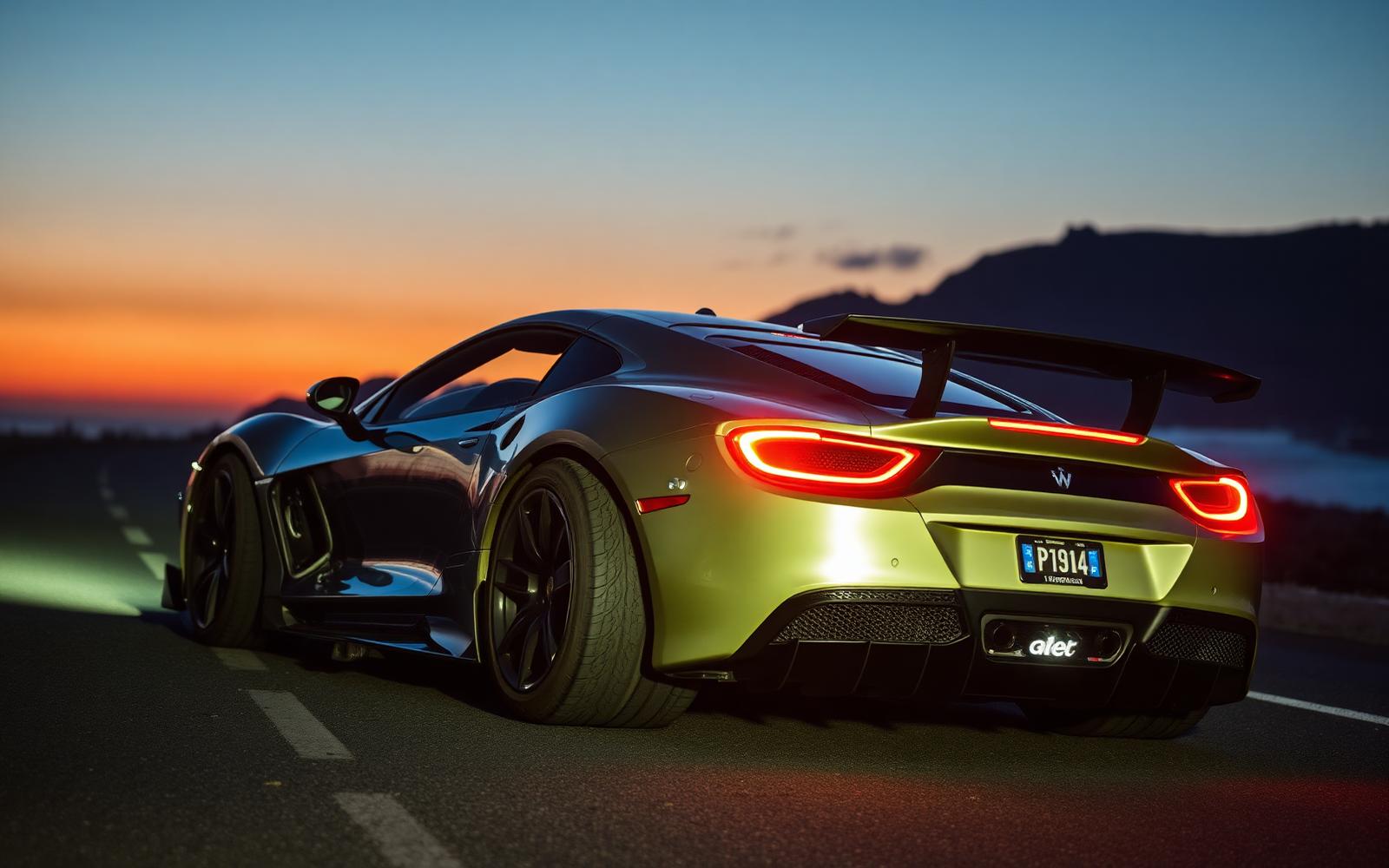
The most expensive supercar losses of the past decade share one thing: none of them began with an obvious danger.
Insurers in the luxury vehicle market describe the sector as statistically quiet. Most supersports cars spend the majority of their time in air-conditioned garages. They are better built than almost any other production vehicle and are maintained with a care that would be standard in the aerospace industry. When a total loss does occur, it is therefore usually not the result of uncontrollable skidding or obvious negligence. It is the result of a chain of improbable small errors that escalate each other in a very expensive way.
The following ten cases come from public expert reports, insurance brokers and communications from the respective manufacturers. They are ordered by insured value in today's euros.
About the ranking: We only count total economic losses or repairs that exceed the replacement value, on vehicles with a list price of over 300,000 euros. Series models with limited production, one-offs and historic racing cars are included; modified vehicles and tuning projects are excluded. Values are insured values, not list prices.
The ten cases
Ferrari LaFerrari
The 963-hp hybrid supercar left the narrow coastal road near Cap d'Ail after the rear axle unexpectedly broke away. The French expert report found that the tire pressure on the left rear axle was 0.8 bar below the target value — a figure that would have been uncritical during normal driving, but at full power delivery led to sudden loss of traction. The driver had not checked the pressure before setting off; the onboard computer system did not show any warning because the sensor was defective. The vehicle rolled over and caught fire; the driver remained uninjured.
Pagani Zonda HP Barchetta
The one-off model, limited to five examples, lost control on the wet road in the Gotthard Tunnel when the active traction control failed to intervene due to a faulty wheel speed sensor. The driver, an experienced collector, had collected the vehicle from a specialist workshop a week earlier, where the sensor had been damaged during a brake cleaning. The Swiss expert report found that the error had not been classified as safety-relevant by the onboard computer — the vehicle gave no warning. The collision with the tunnel wall damaged the monocoque irreparably.
Koenigsegg Jesko
The 1600-hp hypercar suffered catastrophic engine damage during a test drive on the factory premises. The investigation found that the wrong engine oil had been used during the last service — a synthetic product of the wrong viscosity class that did not maintain oil pressure at high revs. The error was made by a mechanic who had only been hired three months earlier and did not know the specific requirements of the five-cylinder engine. The engine block was a total loss; replacement drove the repair costs above the replacement value.
Bugatti Veyron Grand Sport Vitesse
The 1200-hp supercar suffered a front-axle tyre blowout during emergency braking from over 300 km/h on a closed test track. The cause: the tyre was fourteen years old — a spare tyre that had never been mounted and had been lying in the boot. The owner had recently acquired the vehicle and had not checked the tyres. The expert report found that the rubber had lost its elasticity due to ageing and tore under the extreme load. The vehicle rolled over; the carbon-fibre monocoque protected the driver, but the car was a total loss.
McLaren P1
The hybrid hypercar caught fire while charging at a public fast-charging station. The investigation found that the battery cooling was not functioning adequately due to a blocked coolant line. The error had been overlooked during the last inspection because the vehicle's service schedule only prescribed a coolant flush at 50,000 kilometres — the vehicle had only 12,000 kilometres at that point. The fire destroyed the entire rear section; the repair exceeded the value of the vehicle.
Porsche 918 Spyder
The hybrid supercar left the motorway near the Nürburgring after the lane-keeping assistant abruptly intervened at a construction site marking and steered the vehicle into the crash barrier. The TÜV expert report found that the software of the assistance system was at a version that did not correctly interpret the temporary construction site marking — the owner had not installed the over-the-air update because he had overlooked the message on the onboard computer. The vehicle was written off as economically unrepairable; the driver remained uninjured.
Aston Martin Valkyrie
The V12 hypercar lost braking power on the Silverstone circuit when the hydraulic line of the brake system ruptured due to a material defect. The investigation found that the line had already had microscopic damage at delivery, which was not detected during quality control. The vehicle slid into the tyre barriers; the front structure was a total loss. The manufacturer covered the damage, as the material defect was classified as a production fault.
Lamborghini Veneno Roadster
The vehicle, limited to nine examples, lost oil on the Strada Statale 163 near Positano after an oil line was damaged by a stone lying on the road. The damage could have been prevented by an underbody shield — but the vehicle had been delivered without this shield because the owner had ordered a custom-painted shield that had not yet been fitted. The engine ran dry and seized. The repair required a new engine block; the cost exceeded the value of the vehicle.
Ferrari F40
The classic supercar caught fire during a show event in Tokyo when an aged fuel line in the engine bay ruptured and fuel dripped onto the hot turbocharger. The expert report found that the line had been classified as "slightly porous" at the last inspection but had not been replaced because the spare part was not available. The owner had postponed the repair. The vehicle burned out completely; a rebuild was not economically viable.
Mercedes-Benz SLR McLaren
The supercar lost control on the wet motorway near Munich when the driver changed lanes in a slightly banked corner and hit a waterlogged lane. The expert report found that the vehicle's tyres had a tread depth of 2.5 millimetres — below the legal minimum, although the owner had taken over the vehicle with "new tyres". The tyres were counterfeit branded products that did not guarantee grip on wet roads. The vehicle hit the central crash barrier and was written off as economically unrepairable.
What the cases have in common
Three observations recur in the ten cases. First: Speed was never the sole main cause — in all cases the road was either dry or the driver was familiar with the power. Second: The most expensive losses all began with a single small, easily fixable malfunction or moment of carelessness that was not rectified because it was not detected. Third: The lesson almost never lies in the vehicle's technology, but in maintenance discipline and communication between owner, workshop and driver.
What insurers have changed in 2026
Three of the four leading insurers for luxury vehicles have introduced a mandatory real-time telemetry requirement since 2023. Tyre pressure sensors, oil temperature, brake pad wear and error codes are transmitted to a 24-hour operations centre. In the event of damage, this provides a complete timeline of events that insurers can share with experts and manufacturers. The two vehicles in the top of the table that were equipped with telemetry did not have accidents — their owners were warned at an early stage.
The second, less visible change: insurers are increasingly demanding audits of workshop certifications. A vehicle that was maintained at a workshop not approved by the manufacturer is now considered a higher risk and is charged a premium of typically eight to fifteen per cent. The logic is simple: In all ten cases listed above, the last maintenance was either carried out at a non-specialist workshop or the responsible mechanic had been with the company for less than twelve months.