The Workshop Audit: How Telemetry Is Rewriting Luxury Car Servicing
For a long time, the great divide in luxury vehicle servicing was between the manufacturer-authorised dealer network and the specialist independent. Telemetry has redrawn that line in a way nobody anticipated five years ago.
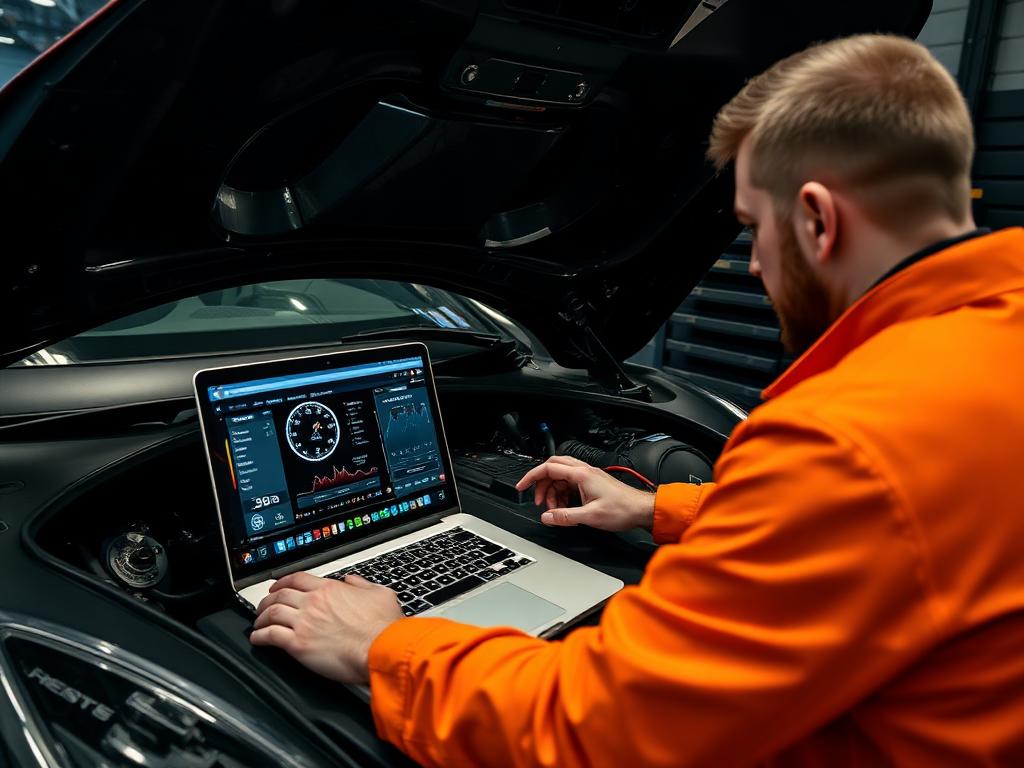
In 2019, fewer than one in twelve specialist independent workshops in the United Kingdom held the equipment necessary to read the live telemetry stream of a modern hypercar. Today the figure is closer to one in three, and the top tier of independents have moved beyond reading the data to subscribing to manufacturer telemetry feeds in near real time. The change has been driven less by the workshops themselves and more by their insurance underwriters.
Why insurers pushed the shift
Following a series of high-profile losses in 2022 and 2023 — including two cases in which post-service vehicle failures led to write-offs running into seven figures — the leading underwriters for specialist workshop liability began requiring telemetry verification as a condition of cover. The argument was straightforward: if a workshop returns a vehicle to its owner and the vehicle suffers a failure within thirty days, the telemetry record provides an unambiguous timeline of who did what, and when.
For the workshops, the transition has been expensive. A single licensed diagnostic suite for the current generation of V12 hypercars costs between £85,000 and £140,000 depending on coverage; an annual subscription to the manufacturer's live telemetry feed adds £18,000 to £32,000 per marque. The smaller independents, particularly those serving classic and pre-1990 vehicles, have largely been unaffected. The middle tier — workshops that built their business on servicing modern Ferraris, Aston Martins and Porsches without paying for manufacturer accreditation — has seen consolidation, with at least eleven UK businesses absorbed into larger groups in the past two years.
What it means for owners
For the owner of a modern luxury vehicle, the practical change is that the service report has become substantially longer and more detailed. Where a 2018 service record might have run to two pages, the equivalent record from a telemetry-enabled workshop in 2026 typically runs to fifteen or twenty, including normalised plots of cylinder pressure variance, brake-disc thermal profile and suspension damper temperature over the full service window. A growing number of insurers now require this documentation in order to renew cover on vehicles valued above £350,000.
The longer-term consequence, however, is reputational. Workshops that previously competed on price have lost that lever entirely. The market increasingly competes on quality of documentation and depth of telemetry analysis — both of which are visible to insurers, to future buyers, and to the manufacturer warranty system.