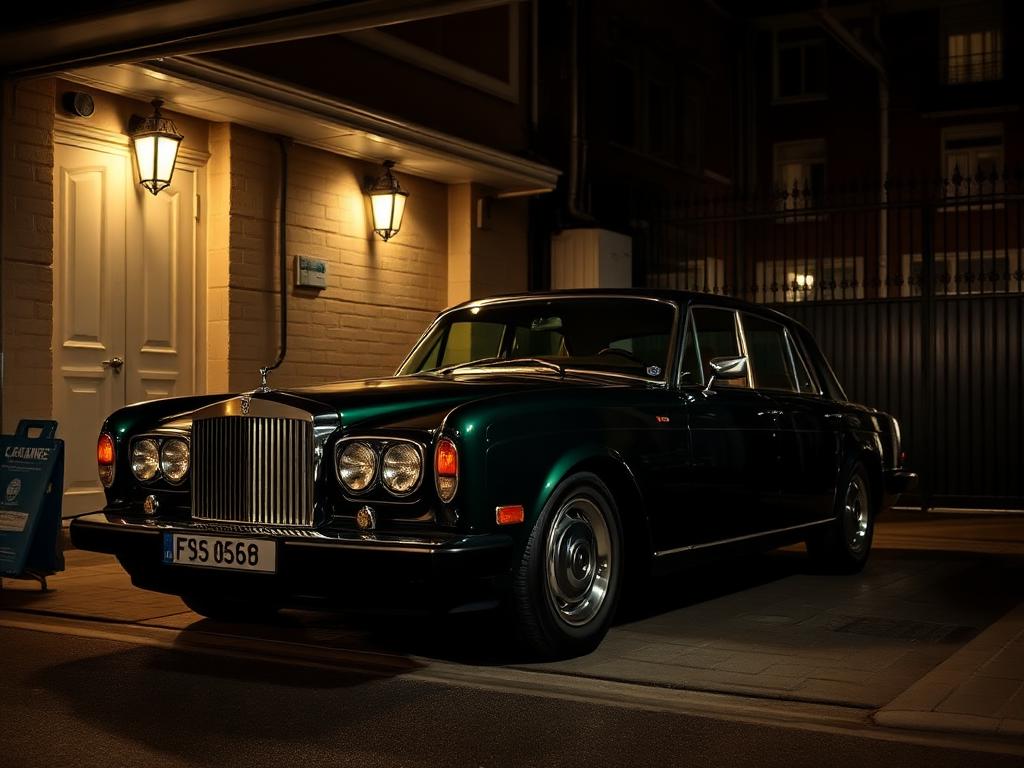
Westminster's New Luxury Tax Proposal Faces Lords Resistance
A cross-party amendment that would extend vehicle excise duty thresholds to cars registered abroad but ordinarily kept on UK soil has run into resistance in the House of Lords, with three former Treasury ministers signalling they will table wrecking amendments at committee stage.

The proposal, introduced into the Finance (No. 2) Bill at report stage in the Commons last month, would close what the Treasury describes as a 'longstanding asymmetry' in the way high-value private vehicles are taxed when their owners hold residency in more than one jurisdiction. Under current rules, a vehicle first registered in Monaco, Luxembourg or the Channel Islands and brought into the United Kingdom for fewer than 183 days in a single tax year incurs no UK duty, even where the owner is a UK-resident taxpayer.
The amendment, jointly tabled by Conservative backbencher Edmund Crawley and Liberal Democrat peer Baroness Mountfield, would replace the day-counting threshold with a 'principal use' test administered by the DVLA in cooperation with HMRC. Officials at the Treasury have estimated that the measure would yield between £180 million and £240 million in its first full year, a figure that opponents in the Lords have repeatedly characterised as 'aspirational'.
The objections in the Lords
Lord Pelham, a former financial secretary to the Treasury, told the chamber on 9 April that the 'principal use' test would 'place HMRC in the position of having to second-guess the genuine residency arrangements of taxpayers, many of whom have legitimate cross-border professional lives'. He added that the cost of enforcement could easily consume a third of the projected yield. A second peer, Baroness Vintner, raised concerns about the proportionality of the proposal when applied to vehicles held in family trusts, a point on which she has tabled a separate amendment.
The government's chief whip in the Lords has indicated that ministers will accept clarifying amendments at committee but will resist any change that would convert the test into a quantitative day-count rule. A senior Treasury official, speaking to Arcadia Vibe on condition of anonymity, said that 'the policy intent is to capture vehicles whose owners are demonstrably UK-resident and whose use of the vehicle is demonstrably UK-based — not to harass taxpayers whose travel arrangements happen to be complex'.
What the industry says
The British Specialist Cars Federation, which represents 240 dealers and brokers across England and Scotland, has issued a measured statement supporting the principle of the amendment while urging that the threshold be set at vehicles with a list price above £200,000. 'Below that figure the administrative burden is plainly disproportionate to the revenue,' the Federation's director general told members at a closed briefing in Mayfair last week. Industry insiders expect the threshold to be set at £250,000 once the Lords have completed their amendments.
For the moment, the bill remains at committee stage in the upper house. The government has indicated that royal assent is expected before the summer recess, but the final shape of the new duty regime is unlikely to be clear before the autumn fiscal event.